
Why I fixed one thing and left the rest alone
By Patrick Allen, SAWTA
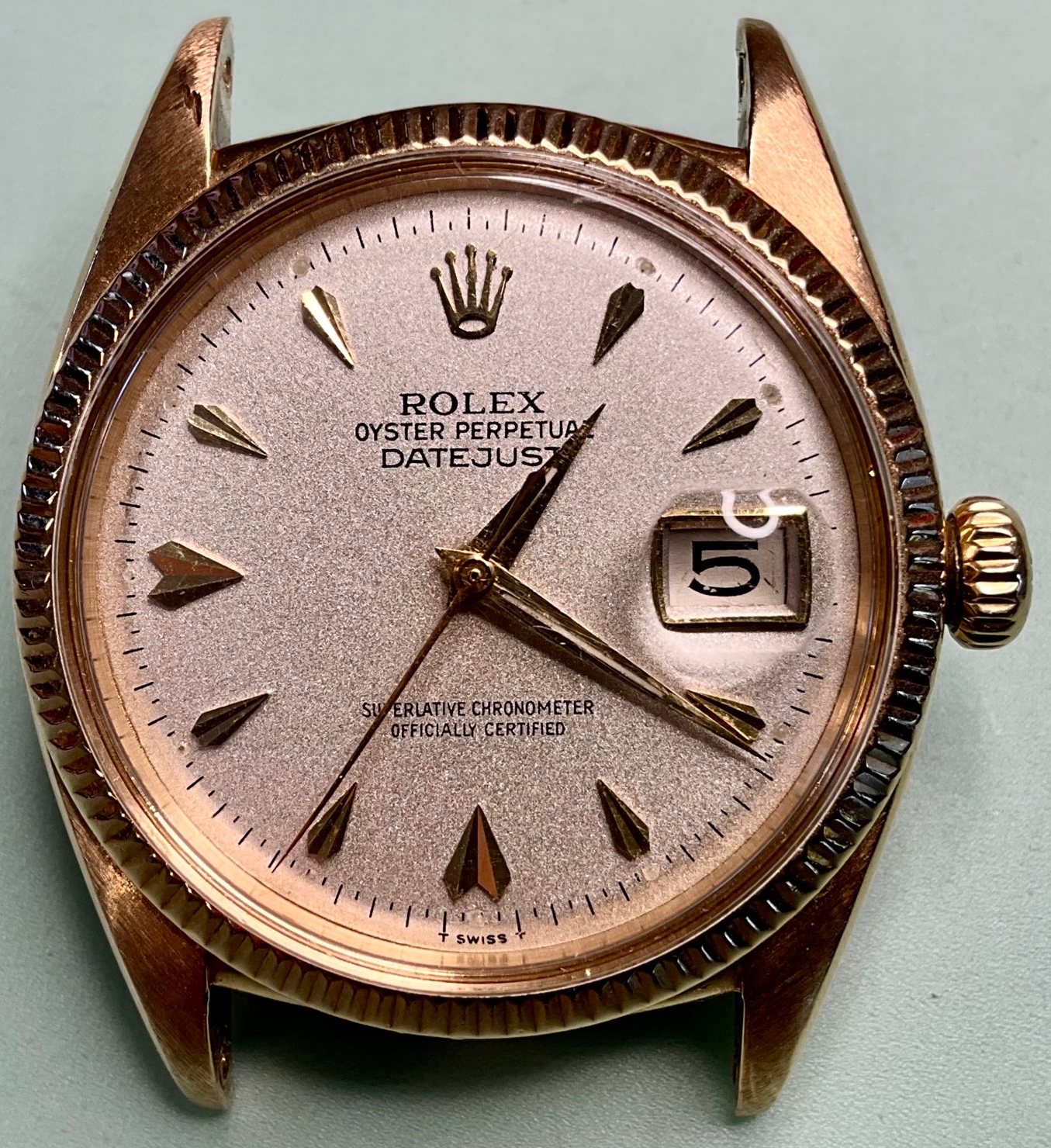
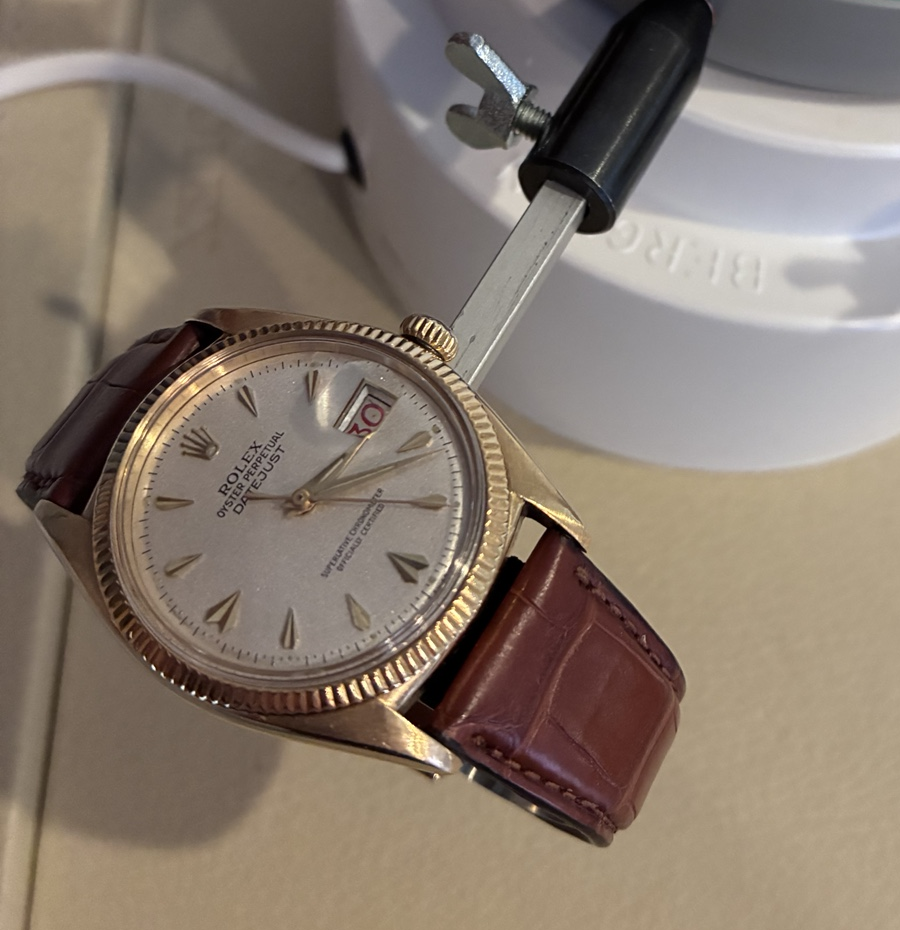
The owner of an early Rolex Datejust got in touch a week or two after I’d appraised it. The 11 o’clock marker was floating around under the crystal, which is not where Rolex put it.
I like to say I’m married to any watch I touch. If I adjust the rate and the watch stops three months later, I’m the guy who was last inside it. I understand why I get the call. I also know how many things can be quietly wearing out in a vintage watch, so as a rule I rarely agree to repairs without a full overhaul.
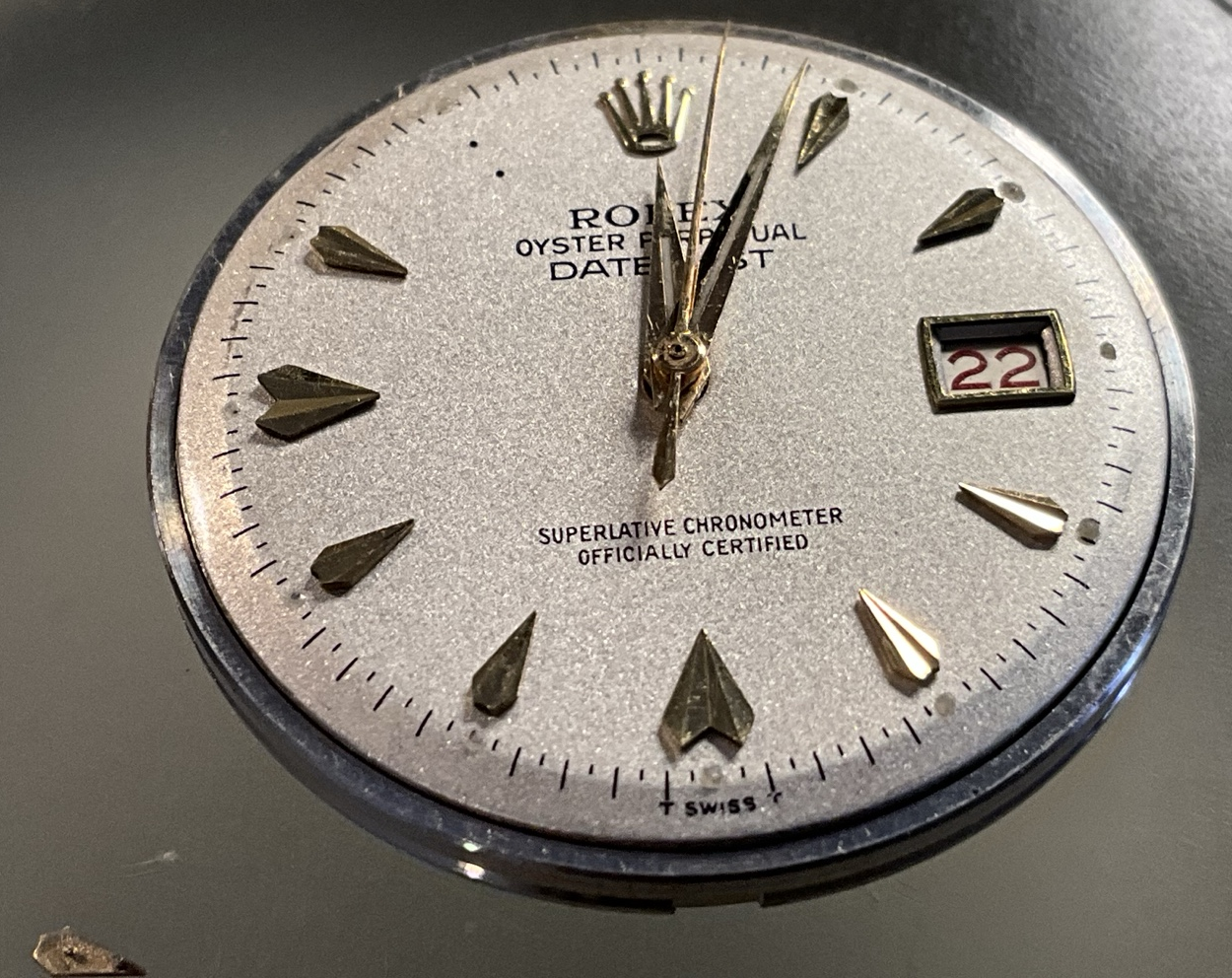
This was a ref. 6605 the owner had bought in Paris. I often take a movement out during an appraisal so I can look at the edge of the dial. On this one, tool marks around the retaining tabs suggested somebody had already had difficulty getting the movement back in, so I left it alone. I could see adhesive behind the Rolex coronet, which made me suspect the dial had been refinished. What made the marker come off? Old adhesive could have given way, or the watch could have taken an impact, or both.
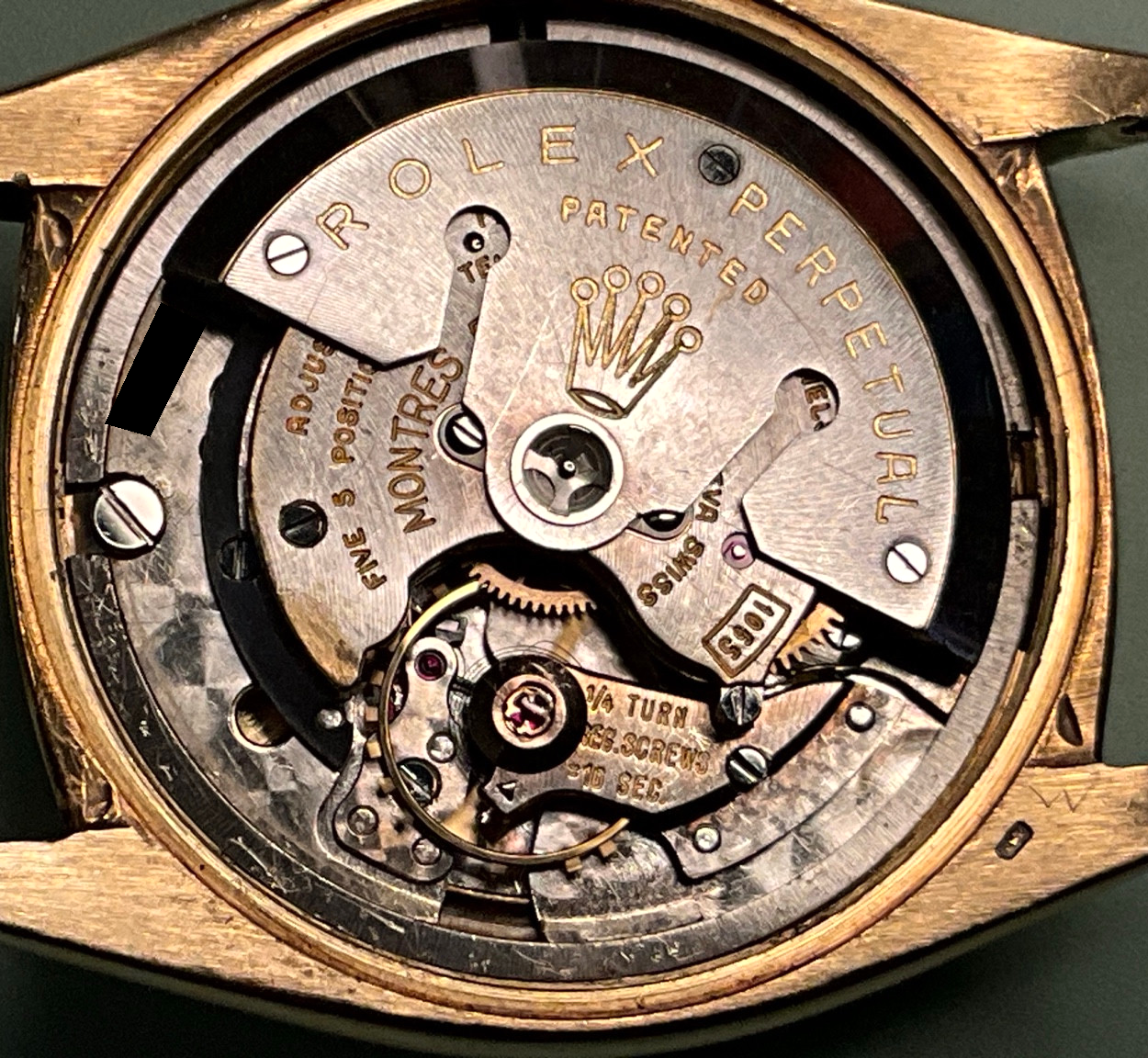
I worked in a conservation shop as an apprentice. An estimate required a full disassembly, whether it was a watch, a clock or a singing-bird box. That was the only way to know for sure the scope of the work required. The owner said this watch had been serviced within the past year. The movement was clean, I could see oil in the jewels and on the pivots, and it was keeping time well enough that I’d have been happy to send it out. After a frank conversation with the client, I agreed to put the marker back without a warranty on any other aspects of performance.
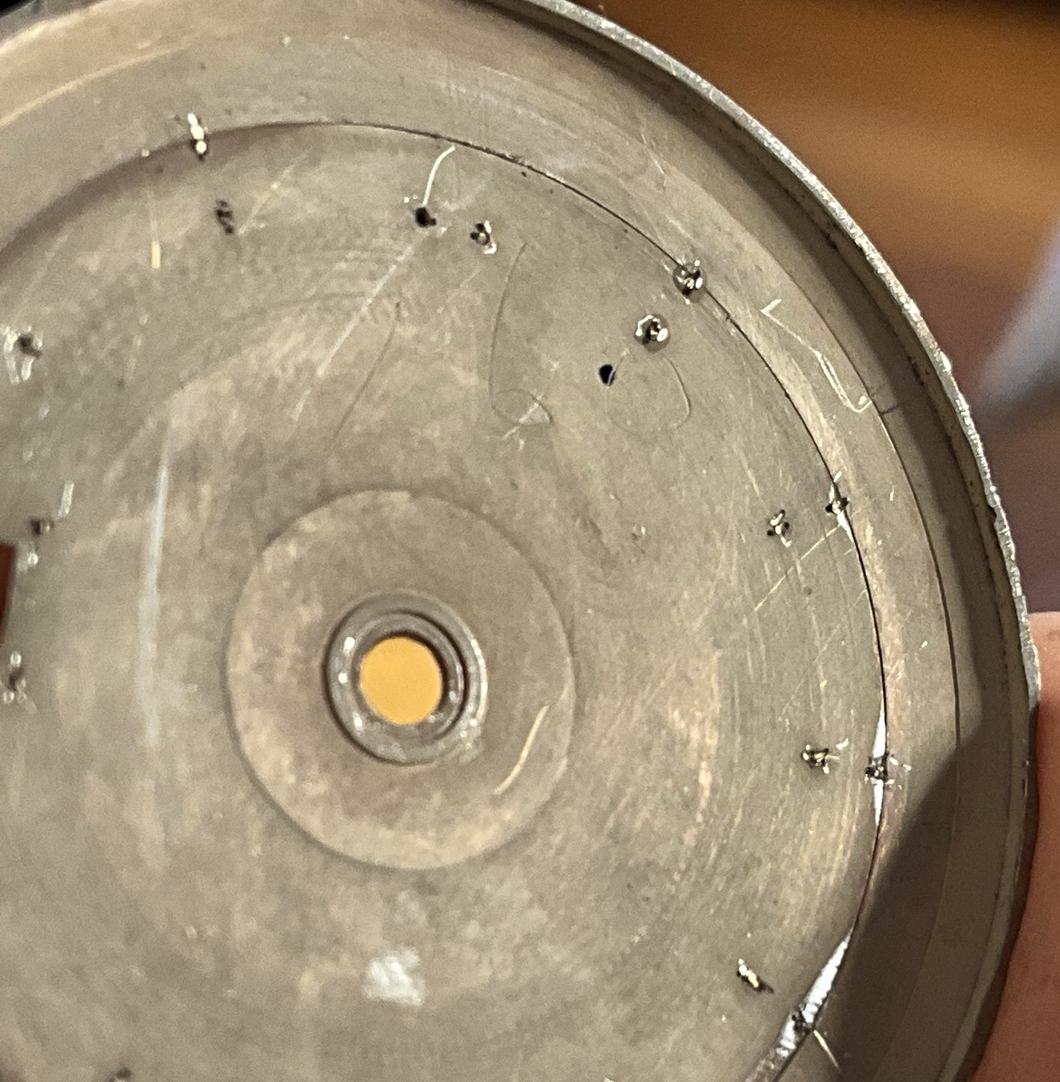
I took the movement out, lifted the hands, and removed the dial. After taking photos, I checked the other markers with a leather buff to make sure they were stable. The loose marker still had its mounting prongs, so I used those to seat it and applied a tiny amount of adhesive on the back of the dial, and left it covered for two days to cure. The proper method for installation would involve creating a rivet on the back side of the dial, but in this case the risk outweighed the benefits.
I re-installed the dial and hands, and found that getting the movement back into the case was every bit as challenging as I’d expected. I checked for dust under the crystal, closed the caseback and put the watch on a cyclotest winder for two days to ensure hand clearance, then I tested the power reserve to ensure the automatic system was working properly.
It’s common for clients to ask for quick or partial repairs, and 99% of the time it’s actually not doing them any favors to agree. In this case, I didn’t know anyone else who I would trust to help the client, and I’m confident that if issues appear down the road, the client will return to me as a trusted advisor rather than a “watchbreaker”.
