So, you’ve inherited a pocket watch. Now what?
At least once a week someone reaches out requesting information about a family pocket watch. Sometimes it’s multiple pocket watches from multiple relatives. It could be a pocket watch that they have recently inherited, or a pocket watch that they inherited decades ago but that they want to pass on to a relative. Each one has a story, sometimes some memories, and each story has some unanswered questions.
So where do you start? The first question I always ask is “what are your goals?”. Is this something that you want documented so the estate or the recipient understands the importance of the watch? Is it something that you want to present in its current condition - to tell the story - or do you want to see it working again? Do you just want the watch to run or do you want it fully restored? Is this something you or the recipient intend to use? Is this something you would like to sell? Are there any competing interests for this watch within the family? All this before I even ask about the watch iteself.
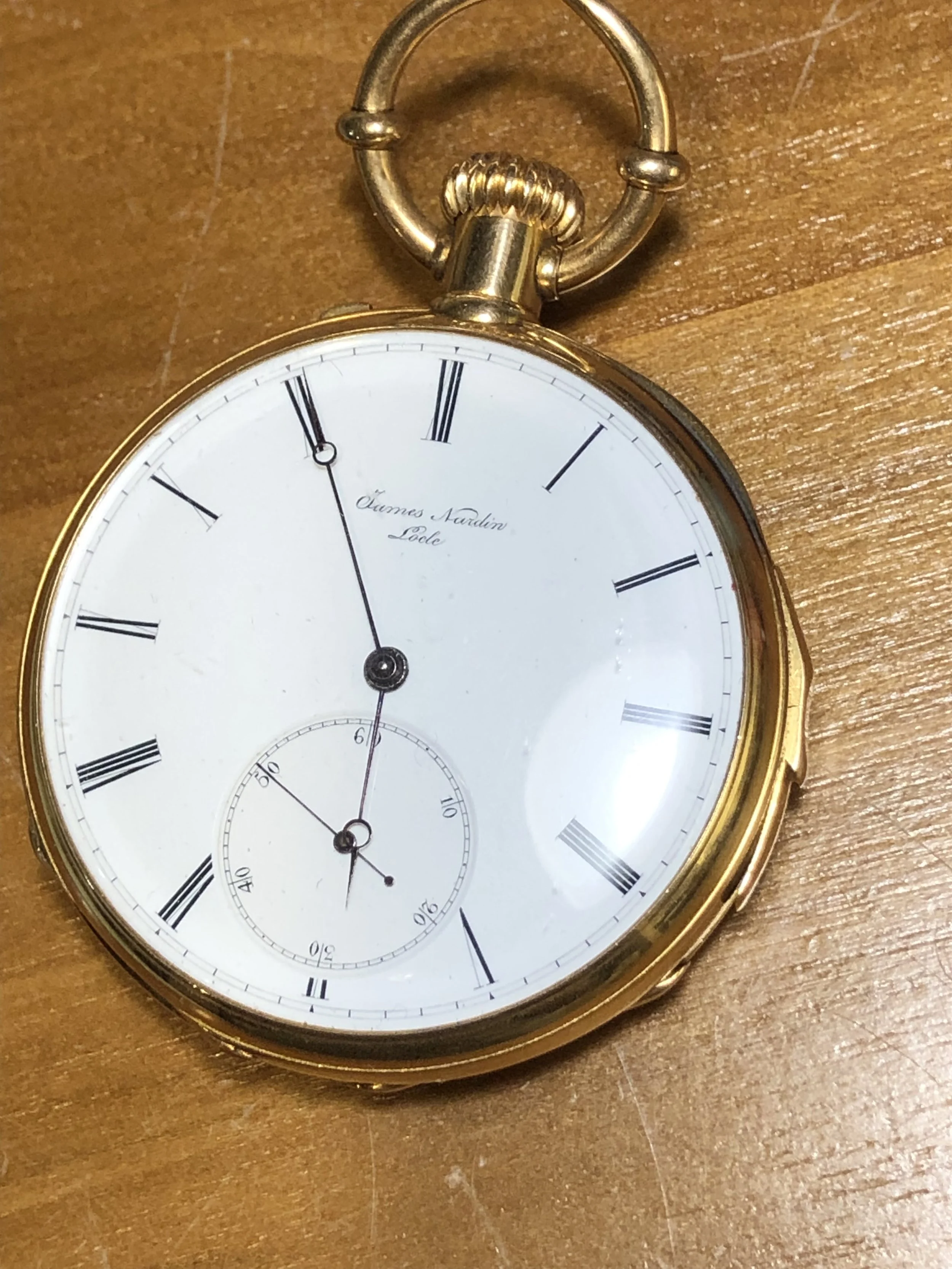
But it does raise the question- what kind of watch is it? Is it an American railroad pocket watch? A fine Swiss pocket watch with complications, or an extra thin case/movement? In many cases the watch will have the name of the manufacturer on the dial, right under the 12 o’clock mark. This may seem like an obvious first step to some, but in my experience many people overlook the brand name. It could be that the world of watches seems difficult to navigate, and so they don’t mount a thorough inspection. There may be other markings on the case or inside the caseback, but pocket watch cases are not always made by the same company who made the movement and signed the dial.
A common question is “what is the value of this watch?”. That’s an important question that may influence your goals. If the watch is extremely valuable or rare, or if it has historical significance, that will inform how the watch is stored, insured, passed on, or sold. Often this is one of the first questions that is asked, however it’s the result of a good deal of research.
To determine value, we evaluate the condition of the whole pocket watch complete with photographs, but we start by looking at the case. Why? Because the case is the first thing we see! What is the case made of? Precious metal alloys or plated? Is it engraved? Is it heavily worn? Does the case open and close properly? Are there any markings or service marks inside the caseback?
Next we evaluate the dial. Is it signed by a specific maker or jeweler? It was very common in the early 20th century for jewelers to import movements, cases, and dials, and sign their own name. In some cases I’ve seen movements made by high end manufacturers like Patek Philippe or LeCoultre, with dials signed by the jeweler who sold the watch. Is the dial cracked or damaged in some way? Is it made from precious metal or enamel?
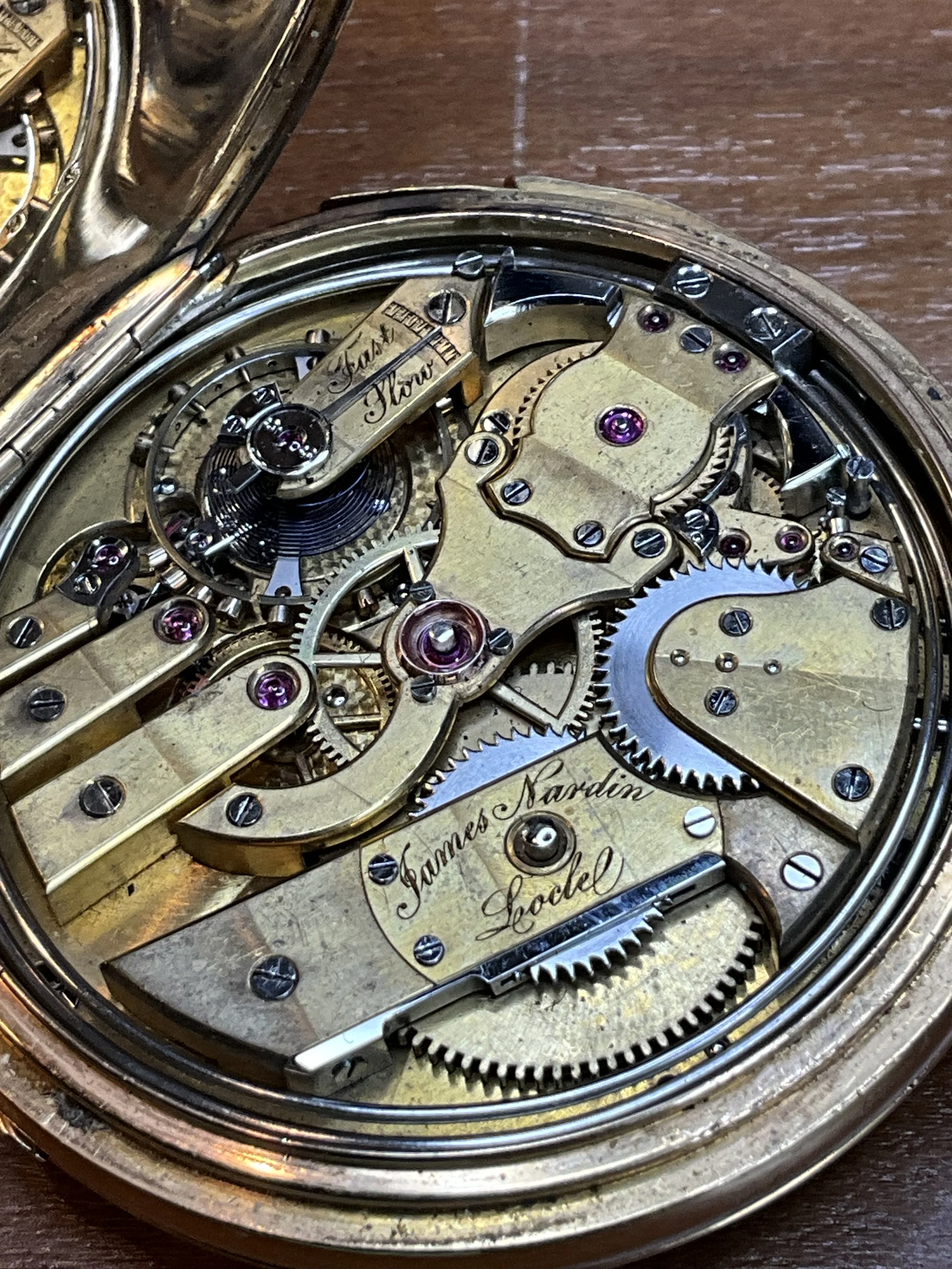
Finally we look at the movement. The movement informs other possibilities related to your goals. Is the movement signed? Does the signature align with other names on the case and dial? Is it functioning properly? Depending on the quality and condition of the watch, it may benefit from a service, or it may justify a full restoration. Many pocket watches were never intended to operate for decades without proper maintenance, and bringing them back to reliable working condition can require a significant investment in time, parts, and labor.
After we’ve done all of this, we look at the caliber information and serial number on the movement, which will enable research into the age of manufacture. The case serial number can be useful in some instances, but often they were made by separate companies, and the case serial number is often only valuable if there is original paperwork from the manufacturer highlighting information about the case and movement.
From here, it’s possible to perform a market analysis. The process of getting to this point is approximately three hours of work. The next step is about another hour at a minimum, assuming there were no challenges along the way. The result is a document appropriate for any estate planner or executor who may need context around the importance of this heirloom.
In many cases, the monetary value of a pocket watch is only one part of the story. Some watches represent important periods in American manufacturing, transportation, or family history. Others may have little market value, but enormous sentimental importance to the family that has cared for them across generations.
Whether the goal is restoration, documentation, insurance, estate planning, or simply understanding what you have inherited, taking the time to properly identify and evaluate a pocket watch can preserve both historical and personal context that might otherwise be lost.
If you have inherited a pocket watch and would like assistance identifying, documenting, appraising, or restoring it, feel free to contact Spring and Barrel. Even when a watch is not exceptionally rare or valuable, understanding its story is often worthwhile.